
- Featured
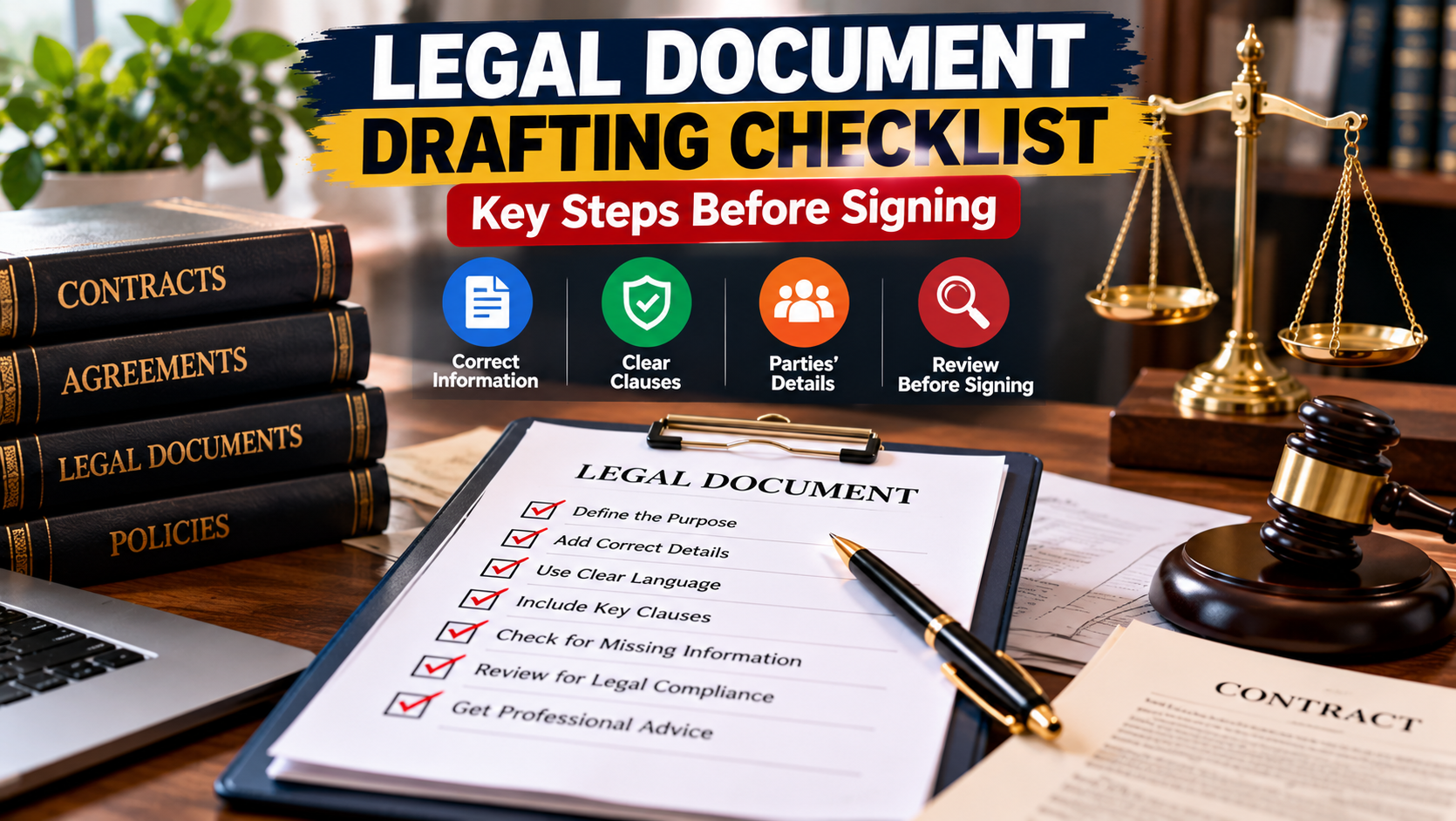
Legal Document Drafting Checklist: Key Steps Before Signing
Signing feels like the finish line, but it is really the point of no return. Once your name is on the page, you are bound by every word in it, including the ones you skimmed. A short, steady checklist can catch most problems before they cost you money or stress.
If you have ever wondered how to draft legal documents that hold up when something goes wrong, the answer starts well before the signature line. It starts with a clear review of what the paper says, who it names, and what happens if plans change. The steps below walk through that review in a simple order.
1. Confirm the Purpose of the Document
Start by asking one plain question. What is this document supposed to do? A lease sets rent and living terms. A service agreement sets the work, the price, and the schedule. A power of attorney lets someone act for you.
If you cannot say the purpose in one sentence, the document may be trying to do too much. Fix that first, because every other check depends on it.
2. Check Every Name and Detail
Small errors cause big headaches. Go through the document and check each fact against an official source.
- Full legal names of every person and business
- Correct addresses and contact details
- Dates, including start dates, end dates, and deadlines
- Dollar amounts, written the same way each time
- Property descriptions, account numbers, or serial numbers
A business name that is slightly off can make an agreement harder to enforce. Match names to ID, registration papers, or official records.
3. Read the Whole Thing, Not Just the First Page
It is tempting to skim the long parts. Do not. Read every section slowly, then read it again out loud. Awkward or confusing sentences are much easier to hear than to see.
Mark anything you do not understand. If a sentence can be read two ways, it will eventually be read both ways, usually by two people who disagree.
4. Look for Vague Words
Words like “soon,” “reasonable,” and “as needed” leave too much room for argument. Replace them with facts wherever you can.
- “Within 10 days of receiving the invoice” is better than “promptly”
- “$2,500” is better than “the agreed amount”
- “March 1, 2027” is better than “early next year”
If something can be counted, measured, or dated, put the number or date in writing.
5. Make Sure Key Terms Are Defined
If the document uses a special word like “Services,” “Property,” or “Confidential Information,” it should say what that word means. Then the same word should be used the same way throughout.
Watch for terms that change halfway through. If one section says “the work” and another says “the project,” ask whether they mean the same thing. If they do, pick one.
6. Confirm the Money Terms
Most disputes come down to money. Check how much is owed, when it is due, and how it will be paid. Look for late fees, deposits, refunds, and what happens if a payment is missed.
Also look for costs that are easy to miss, like automatic renewals, cancellation fees, or extra charges for changes. Add up the real cost before you sign, not just the headline price.
7. Understand How the Agreement Ends
Every agreement should explain how it can end. Look for the length of the term, how to cancel, and how much notice each side must give.
Ask yourself what happens if the other side does not do their part. Is there a way to fix the problem first? Can you leave without a penalty? A clear exit plan protects you if the relationship goes badly.
8. Review Who Owns What and Who Is Responsible
If the document involves creative work, ideas, or property, check who owns the result. Also check who is responsible if something is damaged, delayed, or goes wrong.
Some agreements quietly limit one side’s responsibility or shift costs onto the other. These sections are often short and easy to overlook, so read them with extra care.
9. Check How Disputes Will Be Handled
Look for a section that says what happens if you disagree. Some documents require mediation or arbitration before anyone can go to court. Others name a specific state or county where any case must be filed.
These details matter. A dispute clause that sends you to a court far from home can make a small problem expensive.
10. Check the Signing Requirements
Not every document is valid with just a signature. Some need a witness, a notary, or specific wording to count under your state’s rules. Wills, real estate papers, and certain powers of attorney are common examples.
Also make sure the right person is signing. If a business is involved, the signer should have the authority to sign for it.
11. Get a Second Opinion
Give the document to someone who was not part of the deal and ask them to explain it back to you. If their version differs from what you expect, you have found a problem worth fixing.
For high stakes documents, such as property sales, business partnerships, or anything involving a lot of money, have a licensed attorney review it. A short review costs far less than fixing a bad agreement later.
12. Keep Copies of Everything
After signing, make sure every party gets a fully signed copy. Save your own copy in a safe place and keep a digital backup. Also keep related emails, receipts, and notes, since they can help show what everyone understood at the time.
Quick Final Checklist
- Purpose is clear
- Names, dates, and amounts are correct
- Vague words are replaced with specifics
- Key terms are defined
- Payment and exit terms make sense
- Ownership and responsibility are clear
- Dispute process is understood
- Signing rules are met
- Someone else has reviewed it
- Copies are saved
Final Thoughts
A good review does not take long, and it can save you from months of trouble. Take your time, ask questions, and never sign something you do not fully understand. If a deal is worth making, it is worth a few extra minutes of care.
This article is for general information and is not legal advice. Rules vary by state, so check local requirements or speak with a licensed attorney for your situation.