
- Featured
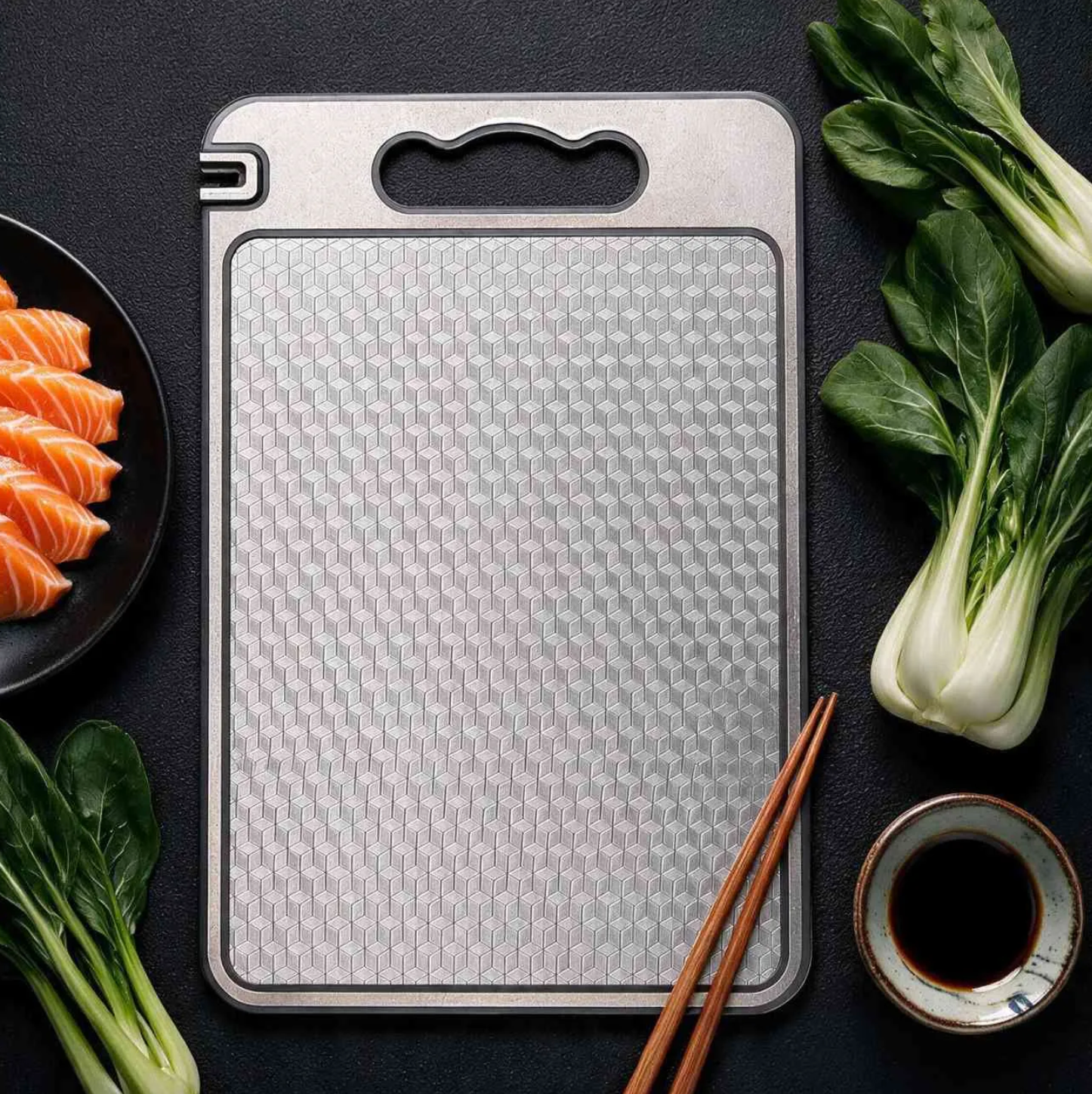
Selecting the appropriate cutting board is a crucial step in creating a tidy, functional, and well-organized kitchen. Although plastic and wood boards are still widely used, consumers are now considering alternative materials due to worries about surface wear, food residue, dampness, and cleaning. Titanium cutting boards are starting to gain popularity among home cooks.
According to its description, the KensaiChef Titanium Cutting Board is a compact, dual-sided food preparation tool with distinct surfaces for different culinary operations. A built-in knife sharpener and garlic grinder are among the characteristics mentioned in the product specifications, along with a titanium surface and a wheat-straw side. However, before making a purchase, it is crucial to comprehend its actual construction, usability, and restrictions.
The KensaiChef board’s operation, potential advantages and disadvantages, comparisons to conventional cutting boards, US purchase considerations, and responses to some commonly asked questions regarding titanium food preparation surfaces are all covered in this guide.
A KensaiChef Titanium Cutting Board: What is it?
A kitchen prep tool called the KensaiChef Titanium Cutting Board is sold as a two-sided substitute for conventional cutting boards. It is touted as having a cutting surface made of titanium on one side and wheat straw on the other, allowing users to select between the two surfaces when preparing various ingredients. The goal is to simplify and organise food preparation.
The wheat-straw side is supposedly intended for fruits and vegetables, while the titanium side is appropriate for foods like raw meat and fish. The spread of food residue from one ingredient to another can be reduced by practicing good hygiene, which includes keeping preparation surfaces apart. Nevertheless, the possibility of cross-contamination is not always eliminated by using different sides.
Additionally, portability, a non-slip design, an integrated knife sharpener, and a garlic-grinding capability are mentioned in certain product descriptions. Those looking for a multipurpose kitchen equipment might find these advertized additions attractive. Because different sellers may have different product configurations, materials, and accessories, buyers should verify the characteristics contained in the specific package.
Learn More About KensaiChef Titanium Cutting Board →
The KensaiChef Titanium Cutting Board: What Is It?
The purpose of the KensaiChef Titanium Cutting Board is to function as a reversible surface for preparation. Depending on the materials and the preparation task, users can select either the wheat-straw side or the titanium side. With this approach, you can have two distinct work areas without needing a separate board for every simple culinary task.
When made and completed correctly, titanium is a corrosion-resistant metal that can withstand moisture and is typically regarded as appropriate for applications involving food contact. Compared to some porous materials, its comparatively non-porous surface might make cleaning easier. However, the quality of the surface, scratches, food residue clearance, and proper sanitation all affect the real hygiene performance.
The wheat straw side is an alternate produce preparation surface. Its resistance to knife marks, precise composition, and manufacturing method all affect how well it works in practice. If a built-in sharpening or grinding feature is present, it should be assessed independently and not presumed to improve the board’s primary cutting performance.
KensaiChef Titanium Cutting Board Advantages
The KensaiChef Titanium Cutting Board’s two-sided design is one possible benefit. By keeping raw animal products and produce on different surfaces, you can simplify kitchen organisation. This is particularly helpful when preparing meals that include fruit, veggies, and meat. However, both sides still need a thorough cleaning, and separate boards might be more practical for more involved food preparation duties.
The titanium construction is the other highlighted advantage. Compared to many other metals, titanium is prized for its durability, resistance to corrosion, and relative light weight. Unlike untreated wood, it does not absorb water. These characteristics make a well-made titanium surface easy to maintain. The drawback is that compared to conventional wood or suitable plastic boards, titanium’s hardness might not be as forgiving on kitchen knives.
The ease of cleaning is another factor to consider. Generally speaking, a smooth, nonporous titanium surface may be cleaned and wiped without absorbing moisture like some timber boards do. Additionally, it is advertized as being dishwasher safe; nevertheless, purchasers should confirm that the entire board—including the wheat-straw portion and any attached accessories—is suitable for dishwasher cleaning. Observe the manufacturer’s directions at all times.
It might not be required to purchase separate kitchen utensils because of other advertized features like a knife sharpener and garlic grinder. A tiny built-in sharpener might not be a suitable replacement for a dedicated sharpening system, and integrated tools may cause cleaning issues. The frequency and effectiveness of these elements determine how valuable it is overall.