
- Featured
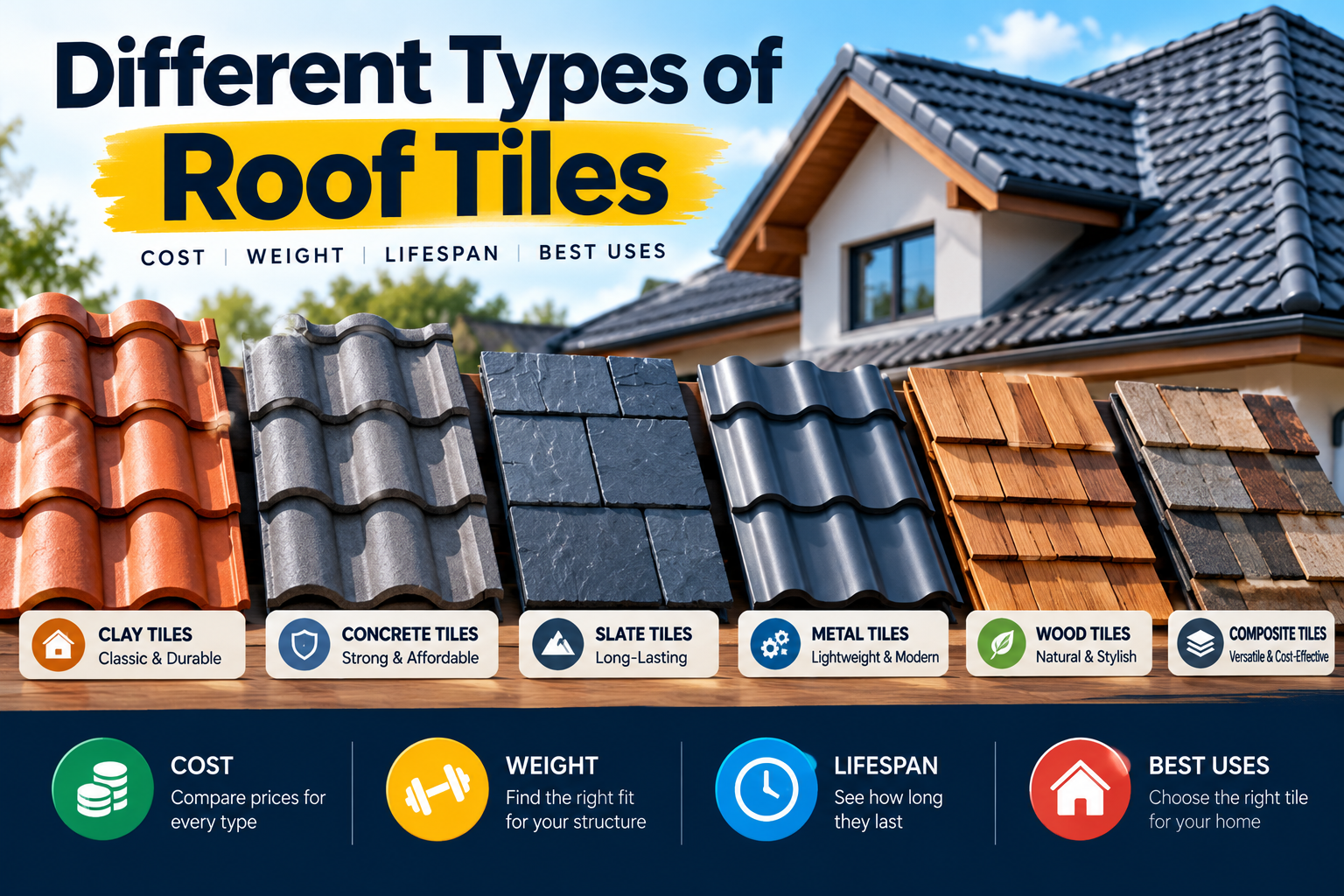
Roof Tile Types Compared: Cost, Weight and Lifespan
Most people pick a roof tile by color and then find out about the weight later. That order causes problems. A tile that looks perfect on a brochure can need extra framing, a bigger budget, or a different installer than you planned for.
A smarter way to shop is to compare different types of roof tiles on three numbers first: what they cost, what they weigh, and how long they last. Once those three are clear, style becomes the fun part instead of the risky part.
Prices change by region and by season, so this guide uses relative cost levels instead of dollar amounts. Weights and lifespans are typical ranges. Your climate, your installer, and your upkeep habits will move the real numbers up or down.
The Three Numbers That Matter
Cost is the one everyone checks. Weight is the one most people skip. Lifespan is the one that decides whether the roof is a good deal in the long run.
These three are linked. Heavy tiles tend to last longer, but they also need a stronger structure and more labor. Light tiles are easier to install, but some of them age faster. Keep that trade in mind as you read.
| Tile Type | Relative Cost | Weight per 100 sq. ft. | Typical Lifespan |
|---|---|---|---|
| Clay | High | About 600 to 1,000 lbs | 50 to 100 years |
| Concrete | Medium to high | About 900 to 1,100 lbs | 50 years or more |
| Slate | Very high | About 800 to 1,500 lbs | 75 to 150 years |
| Metal tile | Medium to high | About 100 to 150 lbs | 40 to 70 years |
| Composite | Medium | About 200 to 400 lbs | 30 to 50 years |
For a sense of scale, a standard asphalt shingle roof weighs roughly 200 to 300 pounds per 100 square feet. That is the load many houses were designed around.
Why Weight Is the Hidden Cost
Take a modest roof of 2,000 square feet. With concrete tile at about 1,000 pounds per 100 square feet, the tile alone weighs around 20,000 pounds. That is 10 tons sitting on rafters that may have been built for a fraction of that.
If the frame cannot carry it, a contractor will have to add bracing or replace parts of the structure. That work can cost as much as the tile itself. Ask for a structural check before you set a budget, not after.
Metal tile flips this problem. The same 2,000 square foot roof might add only 2,000 to 3,000 pounds. For older homes, that can be the difference between a simple re-roof and a major rebuild.
Clay Tile
Clay is the long-distance runner. Fired clay holds its color, resists fire, and handles heat well. Many clay roofs outlast the houses they cover.
You pay for that. Clay sits at the high end on price, and it is heavy. It can also crack under foot traffic or hard hail, so repairs often come from impact, not age.
Concrete Tile
Concrete tile gives you a similar look at a friendlier price. You can find profiles that copy clay, slate, and wood shake, in a wide range of colors.
It is the heaviest of the common mass-market options, so the frame check matters most here. Surface color can fade, and in cold climates you should look for a tile rated for freeze and thaw cycles. A good sealer and clean valleys help it reach its 50 year mark.
Slate Tile
Slate is natural stone, and it holds the record for lifespan. A well-installed slate roof can pass a century. It is fireproof, and it keeps its look without painting or coating.
The cost is the highest of the group, and the weight can be too. Installation takes a skilled crew, and repairs need someone who knows how to remove and replace slate without breaking the pieces around it. For a historic or high-end home, the long life often justifies the price.
Metal Tile
Metal tile uses steel or aluminum panels that are shaped and coated to look like traditional tile. The panels are large, so installation is faster than hand-laying stone or clay.
It is light, sheds snow and rain quickly, and works well in wildfire-prone areas. Rain noise can be an issue without solid decking and underlayment. In hail zones, ask about the impact rating before you sign.
Composite Tile
Composite tile is made from engineered blends, often with recycled content. It is built to copy slate or shake at a lower weight and a lower price.
Quality changes a lot between brands, and the product is newer than the others. Read the warranty closely, ask what it covers, and look for independent test results. A strong warranty from a stable company is worth more than a low sticker price.
Matching Tile to Your Situation
Start with the structure. If your roof was built for light shingles and you do not want to reinforce it, metal or composite tile will be the easier path. If the frame is strong or you are building new, clay, concrete, and slate are all open to you.
Then look at the climate. Hot, dry regions favor clay and concrete. Snowy regions favor tiles that shed weight and resist freeze damage. Coastal homes should check salt resistance on metal coatings and fasteners.
Finally, think about how long you plan to stay. If you will sell in ten years, a mid-priced tile in a good style may give the best return. If this is your forever home, a long-lived tile can cost less per year, even with a higher upfront price.
Costs Beyond the Tile
The tile is only one line on the quote. Underlayment, flashing, ridge pieces, and labor all add up, and steep or complex roofs raise the labor share fast. Heavier tile can also mean added structural work.
Ask each contractor to list the same scope of work. A low number that leaves out flashing or tear-off is not a real savings.
Final Thoughts
The best roof tile is the one that fits your frame, your climate, and your budget at the same time. Compare cost, weight, and lifespan side by side before you fall for a color. Get written quotes, confirm the structure can carry the load, and keep a few spare tiles from the first batch for future repairs.